Dissecting the Machine: A Technical Analysis of pakwin777's Core Game Mechanics
Dissecting the Machine: A Technical Analysis of pakwin777's Core Game Mechanics Pakistan's mobile casino segment has matured rapidly across Karachi, Lahore, and Islamabad. Platforms competing for urba...
Dissecting the Machine: A Technical Analysis of pakwin777's Core Game Mechanics
Pakistan's mobile casino segment has matured rapidly across Karachi, Lahore, and Islamabad. Platforms competing for urban players are no longer differentiating solely on welcome bonus size — they are differentiating on game depth, session speed, and the specific mechanical features that keep players engaged across JazzCash and Easypaisa-funded sessions. Examining what pakwin777 actually offers beneath the interface layer reveals a set of design decisions worth analyzing in detail.
This is not a review in the conventional sense. It is a mechanics audit: what the games do, how they do it, and what that means for any player sitting down with a mobile session in mind.
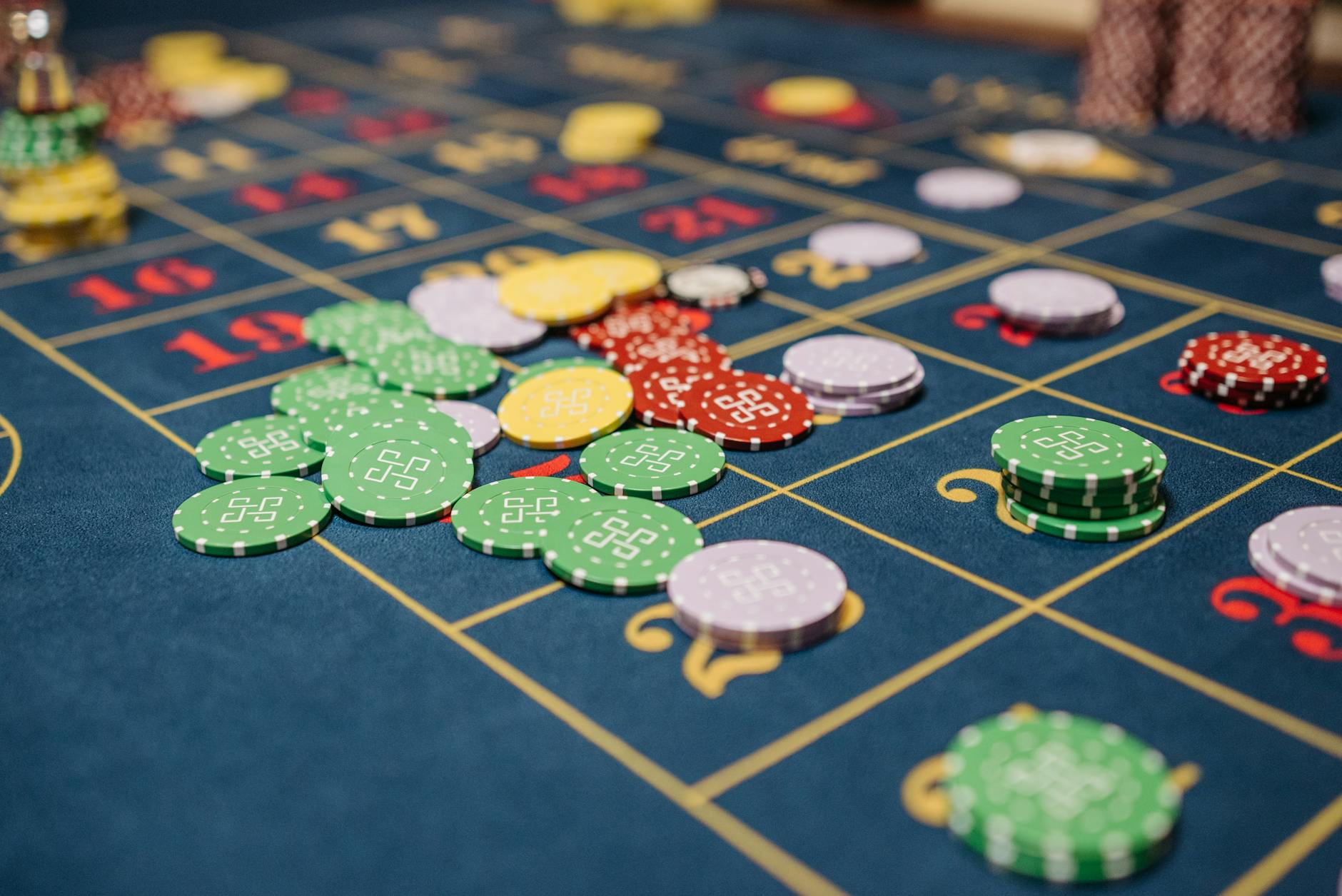
Photo by Pavel Danilyuk on Pexels
Dragon Tiger at pakwin777: What the Card Architecture Actually Means
The format that generates the most repeat live dealer sessions at pakwin777 is Dragon Tiger. The surface mechanics are minimal: two cards are dealt, one to Dragon, one to Tiger, and the higher card determines the winning side. "Minimal" surface mechanics, however, frequently obscure non-trivial structural details that define the actual session experience.
The deck configuration is eight standard decks — 416 cards, jokers excluded. Ace ranks lowest, King ranks highest, which is a reversal of standard poker hierarchy that catches first-time players mid-session. Face cards (Jack, Queen, King) cluster at the high end of the value range; roughly 12 cards out of every 52 in each deck are face cards. Across eight decks, that places 96 face cards in active rotation per shoe. This has no directional consequence for the Dragon-versus-Tiger outcome — both sides draw from the same deck composition — but it does mean high-value tie outcomes are more statistically frequent than many players initially expect when they first encounter a push.
The round speed in tiger pakwin777 sessions is the defining mechanical feature. Deal to result runs under three seconds. The next round loads immediately after. This creates a session architecture where the decision window before each deal is the only meaningful interval. Players who approach Dragon Tiger expecting inter-round analysis time will find the format structurally incompatible with that instinct. The design is built for instinct-speed decisions.
The tiger bet and dragon bet carry equivalent win probabilities from a balanced eight-deck shoe. Understanding this mechanical parity is accurate — but session experience frequently diverges from mechanical equivalence because of streak recognition and interface-driven positional defaults. The tie bet carries a 1-in-13 baseline probability with elevated payout, which is consistent with the format's standard across the industry.
What pakwin777 actually delivers in this format is execution consistency: fast dealing animation, clean card rendering on mid-range Android handsets, and unambiguous result display. For JazzCash users running sessions on the device categories dominant in Pakistan's metro markets, this rendering optimization matters more than it appears on paper.

Photo by Pavel Danilyuk on Pexels
Timed Ludo at pakwin777: Where the Countdown Is Completely Miscalculated
If Dragon Tiger is pakwin777's fastest format by per-round duration, Timed Ludo presents an entirely different mechanical challenge: it is the format where players most consistently misread the time constraint until several rounds have already elapsed.
The countdown completely miscalculated problem is not about player inattention. It is about format expectation transfer. Ludo in Pakistan is a culturally embedded game — every player arrives with an implicit mental model of the decision pace. Traditional Ludo runs at a conversational tempo. Piece selection, move evaluation, opponent positioning — all happens at a deliberate pace with no penalty for pausing. Timed Ludo removes that temporal slack entirely.
The operative difference is decision compression under real stakes. In a standard session, choosing between advancing an exposed piece versus a safe piece might occupy 5–8 seconds without consequence. In ludo pakwin777's timed format, that same deliberation window costs visible round progress. Players who don't recalibrate their instinct for move selection find themselves behind the timer before making their third piece move.
The dice mechanic is RNG-determined — no player action influences the rolled number. The skill layer sits entirely in piece selection: which piece receives the rolled number, and in what sequence of priority. This is a structurally narrow skill window, and the timer narrows it further. What results is a format that generates the subjective sensation of high-involvement play — fast decisions, visible consequences, real-time opponent board state — while outcome dependency on the dice RNG remains structurally dominant.
For players coming to pakwin777 from traditional Ludo backgrounds anywhere in Pakistan, the single most important calibration adjustment is this: the countdown does not wait for your analysis. Enter expecting a clock that runs continuously, not a clock that pauses mid-decision. Sessions where this adjustment happens in round one or two tend to run more efficiently than sessions where the player is still recalibrating three rounds in.

Photo by Q L on Pexels
Crash Formats and Multiplier Architecture: What the Visual Trajectory Does Not Tell You
The crash game format — Aviator being the most recognized instance in the Pakistan casino market — operates on a distinct mechanical logic from either card games or board games. The multiplier increases from 1.0x at round start and can extend to any value, but it crashes at a point generated by a provably fair RNG system. The player's only decision is when to cash out.
What this means analytically: there is no information in the visual multiplier trajectory that predicts when the crash will occur. Rounds that crash at 1.2x and rounds that reach 18x are both legitimate RNG outcomes. The distribution of crash points across a full session is the relevant statistical unit. Individual round behavior is not a signal.
The practical implication for Pakistan-market players using JazzCash or Easypaisa deposits is direct: decide your exit multiplier before the round begins, or use the auto-cashout feature where available. Decision-making during an active multiplier climb is cognitively influenced by visual tension. Structural decisions — stake size, target multiplier — belong in the interval before the round launches.
Teen Patti and Andar Bahar: Mechanics Worth Registering Before Your First Session

Photo by Marin Tulard on Pexels
Teen Patti at pakwin777 follows a three-card hand format with sequential betting rounds. Unlike Dragon Tiger's binary structure, Teen Patti introduces fold-or-continue decisions at multiple points, creating a longer decision arc per round. Face cards hold conventional high value in Teen Patti — Ace highest, Two lowest — which directly contradicts Dragon Tiger's ace-low framework. Players moving between both formats in a single session should register this distinction explicitly before the first hand.
Andar Bahar is the structurally simplest live format in the catalog: a joker card is revealed, players bet on which side receives a matching-value card. Apparent simplicity does not reduce house edge consistency. The RNG governing card draw operates identically regardless of how minimal the decision layer appears.
FAQ: Game Mechanics Questions from Pakistan Players
Does which side I pick in Dragon Tiger affect my results over time?
No. Dragon and Tiger carry equivalent win probabilities from an eight-deck shoe. Side selection is preference, not edge.
Why do I keep losing rounds in Timed Ludo even when I know the right piece to move?
The timer runs during your deliberation. If the correct play takes more than one second to identify, the clock has already moved. Faster instinctive piece selection is the adjustment, not deeper analysis.
Can I read the Aviator multiplier pattern to predict crashes?
No. Each round's crash point is generated independently. Historical patterns carry zero predictive value for future rounds.
Which payment method is fastest for session access at pakwin777 in Pakistan?
JazzCash deposits process in real-time under normal conditions, making it the preferred option for immediate session access. Easypaisa performs comparably in most metro regions.
Are all formats available on mobile?
Yes. pakwin777 is built for mobile-first play, which is where the Pakistan market engages at the highest volume.
Thank you for reading.
pakwin777 · Curated Silence · 2026